North Indian Food in Bangkok
"Indian food" in Bangkok covers a lot of ground — Punjabi, Mughlai, South Indian, Indo-Chinese, even Gujarati. At BHARAT Flavours Of India, a North Indian restaurant in Huai Khwang, Bangkok, we keep one tradition at the centre of the menu: North Indian, anchored in Punjab and the wider Indo-Gangetic plain. That means real tandoor-cooked chicken, slow-simmered makhani gravies, overnight-cooked dal makhani, dum-layered biryani, and fresh-rolled naan and roti from a charcoal oven.
What "North Indian" actually means on our menu
North Indian cooking is a family of regional styles — Punjabi, Mughlai, Awadhi, Kashmiri, plus the hill cuisine of Uttarakhand and Himachal. The common DNA is dairy-heavy gravies, wheat breads from a tandoor, slow-cooked dals, robust spicing built around garam masala (cinnamon, cardamom, clove, black pepper, bay), and the use of yogurt and cream to round flavours rather than coconut or tamarind.
Our menu covers the core repertoire:
- Punjabi classics — Butter Chicken, Dal Makhani, Chole Bhature, Aloo Paratha, Lassi.
- Tandoori section — Tandoori Chicken (half / full), Chicken Tikka, Murg Malai Tikka, Paneer Tikka, Tandoori Mutton Seekh, Tandoori Roti, five naans.
- Mughlai gravies — Mutton Rogan Josh, Shahi Chicken Curry, Shahi Paneer, Malai Kofta, Mutton Nalli Nihari.
- Biryani & Pulao — Hyderabadi Biryani (chicken / mutton / veg), Shahi Pulao, Veg Pulao, Jeera Rice.
- Vegetarian section — over 50 dishes including Paneer Butter Masala, Palak Paneer, Chana Masala, Bhindi Masala, Aloo Gobi, Dal Tadka. Full coverage on the Indian vegetarian food in Bangkok page.
- Snacks & chaat — Samosa with chole, Mix and Paneer Pakoda, Pani Puri, Masala Papad.
For the opinionated case on why diners pick us, see best Indian food in Bangkok; for the neighbourhood, Indian food in Huai Khwang.
Why most "North Indian" food in Bangkok tastes the same
The honest answer: most Bangkok kitchens use the same 4-5 base gravies (a generic makhani, a generic onion-tomato, a generic green saag, a generic korma) and dress them up with different proteins. That gives diners a butter chicken that tastes like a chicken tikka masala that tastes like a paneer butter masala. The differences are visual, not flavourful.
We build each gravy from scratch:
- Makhani for Butter Chicken and Paneer Butter Masala — slow-cooked tomato base, finished with butter, cream, and kasoori methi.
- Shahi for Shahi Chicken Curry, Shahi Paneer and Malai Kofta — yogurt and cashew base, mild and aromatic.
- Bhuna for Mutton Masala and Chicken Rara — dry-roasted spice base with caramelized onion.
- Rogan for Rogan Josh — Kashmiri chili and yogurt base with whole spices.
- Saag for Palak Paneer and Palak Chicken — fresh spinach, pureed, finished with garlic and ghee.
Different gravies have different DNA. That is what authentic North Indian cooking is — and what most Bangkok restaurants compress for kitchen speed.
The Punjabi side of our menu
Our head chef, Santosh Shah, is from Uttarakhand, the mountain state north of Delhi and east of Punjab. His training and home cuisine sit firmly in the North Indian / Punjabi tradition, and his chef profile covers the stations he runs himself. That shows up in three places diners notice immediately:
- The tandoor — our charcoal tandoor at 480 °C produces naan with proper char marks and tandoori chicken with smoke that gas tandoors physically cannot replicate. We wrote about why charcoal matters →
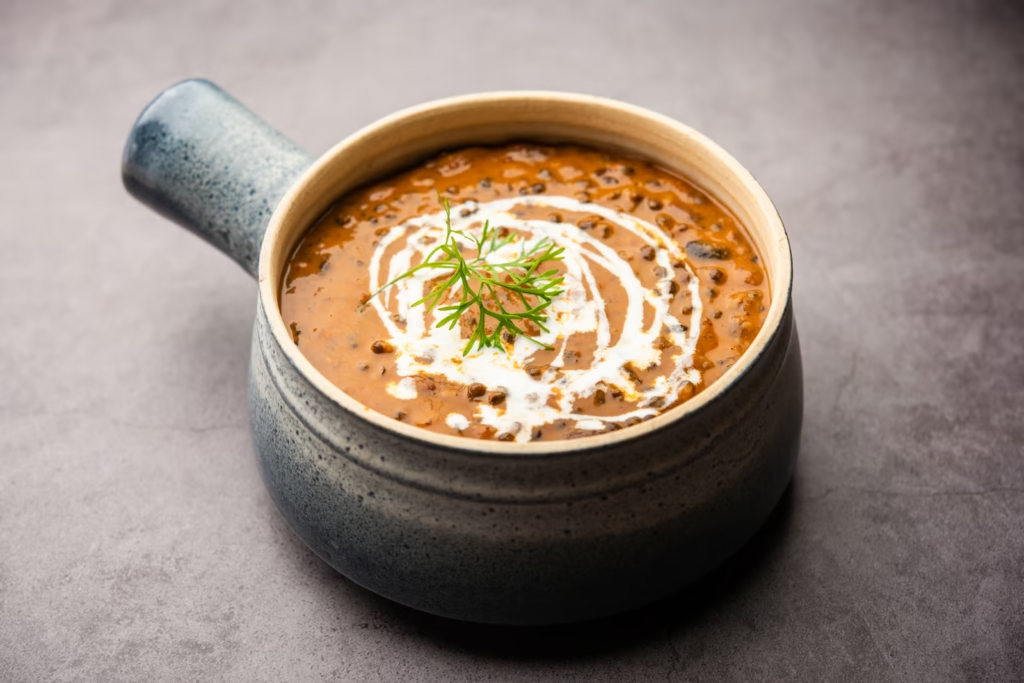
- The dal — Dal Makhani is the test dish for any Punjabi kitchen. Ours simmers on low flame for 8+ hours with whole black urad, kidney beans, butter, and cream. The texture should be silky, almost custard-like. Diners from Delhi and Amritsar tell us this is the closest they've had to home in Bangkok.
- The biryani — layered, sealed, dum-cooked from raw in 35-45 minutes per order. Aged Punjabi basmati. Bone-in halal goat for the mutton version. The aroma when we open the seal at your table is the test of a real biryani kitchen.
The hotels and neighbourhoods we serve
BHARAT is at 2055 New Phetchaburi Road in Huai Khwang. A two-minute walk from Grand Mercure Bangkok Atrium and AVANI Atrium Bangkok in the same Atrium complex; The Lancaster Bangkok is about a 20-minute walk further west along New Phetchaburi Road, or 5 minutes by taxi. We see regulars from:
ร้านอาหารอินเดียเหนือแท้ ย่านห้วยขวาง ถนนเพชรบุรีตัดใหม่ กรุงเทพฯ — เปิดทุกวัน 09:00–23:30 น.
- Sukhumvit hotels — Marriott Marquis Queen's Park and hotels around Asoke and Phrom Phong (5-15 minutes by taxi). See our Indian Food on Sukhumvit page.
- Huai Khwang & Ratchada — local diners and longer-stay expats. Phetchaburi MRT is 5 minutes walk.
- Indian diaspora & Indian business travelers — Bangkok has a sizeable Indian community plus regular visiting business / leisure travelers. Word travels fast.
- Halal-conscious Muslim travelers — Muslim Indian families and GCC travelers who want North Indian food without compromising halal sourcing. Our halal page →
What to order on your first visit
For a table of 2-3 first-timers, the highest-hit-rate combination:
- One tandoor starter — Chicken Tikka, Paneer Tikka, or Tandoori Chicken (half).
- One classic curry — Butter Chicken or Paneer Butter Masala.
- One iconic dal — Dal Makhani, the slow-cooked Punjabi classic.
- Breads — Butter Naan + Garlic Naan from the tandoor.
- Rice — Jeera Rice for sides, or a biryani if someone wants a one-plate meal.
Expect ฿250-450 per person for a proper sit-down dinner, less for lunch. Prices and every dish on offer are listed on the full menu.
Open every day, lunch & dinner
BHARAT is open 9 AM to 11:30 PM, every day. The 30-40 seat dining room has standard tables plus a Dastarkhan-style floor corner with cushions — a touch many Indian diners appreciate. Free parking at the Bangchak gas station next door.
Eat North Indian properly in Bangkok
Walk in, book ahead, or message us — Friday and Saturday evenings book up fastest.
Frequently asked
Is BHARAT a Punjabi restaurant?
We are a North Indian restaurant — Punjabi food is the dominant tradition on our menu, joined by Mughlai (Rogan Josh, Nihari, Shahi gravies), a full tandoor section, and a handful of Mughal-court dishes like Hyderabadi Biryani. Our head chef, Santosh Shah, is from Uttarakhand, so a few subtle Pahari (mountain) touches show up in the cooking too — slightly less cream in the makhani than typical Delhi versions, mustard oil for some marinades. We do not serve South Indian (dosa, idli, sambar). Beyond a short Indo-Chinese section — chilli paneer, manchurian, hakka-style noodles — everything on the menu is North Indian.
Is your tandoor real charcoal or gas?
Real charcoal-fired clay tandoor at 480 °C — the same kind found in family kitchens across Punjab. Most Bangkok Indian restaurants use gas convection tandoors because they are easier to permit and cheaper to operate, but gas tandoors do not produce the smoke that makes tandoori chicken taste like tandoori chicken. The difference shows up in every kebab and every naan — we wrote up the charcoal-versus-gas difference in full.
How is your Dal Makhani different from the usual version?
Ours simmers on low flame for 8+ hours with whole black urad lentils, kidney beans, butter, and cream — the way it is cooked in family kitchens in Delhi and Amritsar. The texture is silky, almost custard-like. The faster yellow-dal-with-cream impostor that some kitchens serve as "dal makhani" misses the long-cook depth. Diners from Delhi tell us this is the closest they have had to home in Bangkok.
Is the paneer fresh?
Yes — we cook with fresh paneer. It goes into Paneer Butter Masala, Shahi Paneer, Palak Paneer, Kadai Paneer and the tandoor-grilled Paneer Tikka. If paneer is the reason you are reading this, the paneer dishes page walks through each one and what to order with it.
Do you really cook biryani from raw on order?
Yes — every biryani is dum-cooked from raw, 35-45 minutes per order, aged Punjabi basmati layered with bone-in halal goat (mutton) or halal chicken, sealed and slow-cooked. The seal is broken at your table, and our biryani page walks through the dum method and each version we serve.
Is the food spiced for Thai or Indian palates?
Default spice is calibrated for a balanced "medium" — not Bangkok-tourist-mild, not challenge-hot. We adjust on request. Tell your server "mild" or "spicy" when ordering and the chef rebuilds the dish.
What is the Dastarkhan floor corner you mention?
Inside our 30-40 seat dining room we have a Dastarkhan-style floor corner with cushions — traditional low seating where diners sit cross-legged around a shared spread. A touch many Indian and Muslim diners appreciate, and a favourite with kids who can move around comfortably. Standard tables are also available; you can pick when you reserve.
Do you have South Indian options?
Not really. Beyond a short Indo-Chinese section, we are committed to doing North Indian properly rather than diluting across many cuisines. For South Indian (dosa, idli, vada, sambar), there are dedicated South Indian restaurants in Sukhumvit that do those dishes better than a generalist could.
Are you halal?
We are halal-friendly — halal-marked chicken bought daily from Makro (CP Foods and Betagro halal lines), halal-marked bone-in goat from our halal supplier for the mutton dishes, no pork in the kitchen and no alcohol in the cooking. The restaurant itself does not currently hold a formal CICOT restaurant certificate. Full detail: halal Indian food in Bangkok.
How does this compare to Indian restaurants in Sukhumvit?
We are a few minutes from the Sukhumvit corridor — same accessibility, more authentic kitchen. See our Indian Food on Sukhumvit page for walking and taxi directions from each hotel/area.