Best Butter Chicken in Bangkok: How to Tell Real Punjabi-Style From the Hotel Version
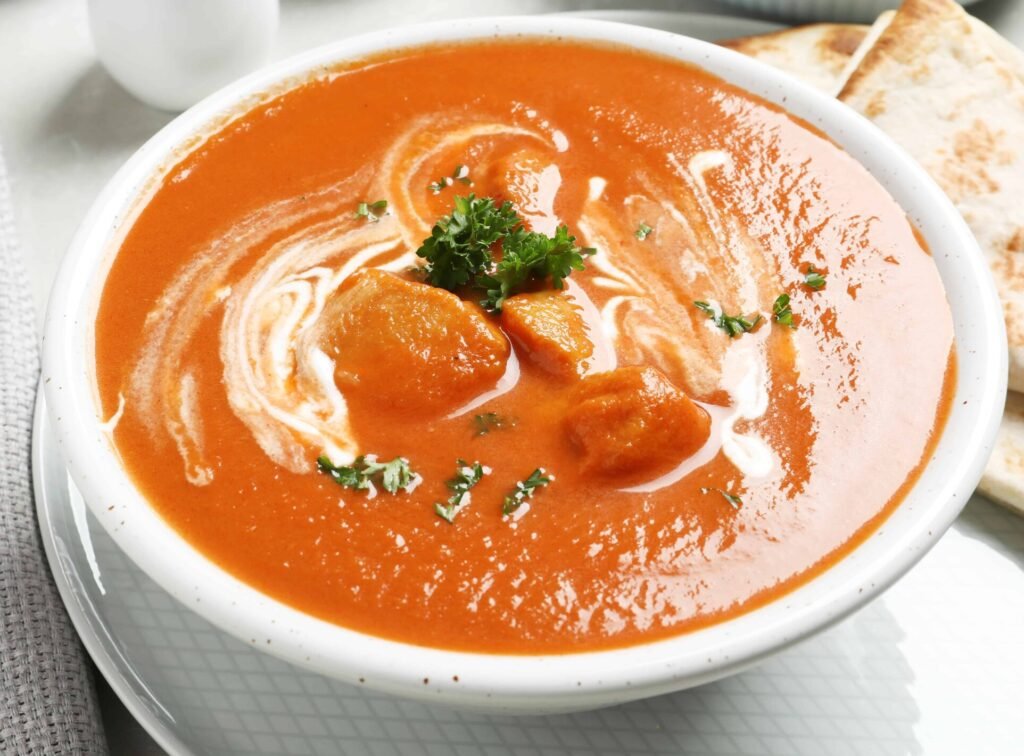
Butter chicken is the most ordered Indian dish in Bangkok. It is also the most often gotten wrong.
Most "butter chicken" served in this city is some version of the same shortcut — a generic creamy tomato gravy with cubed grilled chicken stirred in at the end. It is fine. It is also not butter chicken. The original, invented at Moti Mahal in Delhi in the late 1940s by the Gujral family who needed a way to use up leftover tandoori chicken, is a different dish entirely. There is a reason a Punjabi from Delhi can taste a butter chicken in five seconds and tell you whether it was made by someone who knows what they are doing.
We get asked this all the time at our restaurant, BHARAT Flavours Of India, in Huai Khwang. Hotel guests from Grand Mercure two minutes away, and guests taking the five-minute taxi from The Lancaster, ask about butter chicken on their first visit. Indian travelers ask whether ours is "real" before they even sit down. Both groups deserve a straight answer.
So here it is — six things that separate real Punjabi-style butter chicken from the generic version, plus an honest opinion on where to eat the real thing in Bangkok.
What butter chicken actually is (and is not)
Real butter chicken — murgh makhani, in Hindi — starts with tandoori chicken. Not chicken cubes pan-grilled on a tava. Not chicken sautéed in a pan. Tandoori chicken: marinated overnight in yogurt, ginger, garlic, garam masala, and Kashmiri chili, then cooked in a clay tandoor at 480°C until the outside is charred and the inside is just past pink.
The makhani gravy is built separately. Whole ripe tomatoes (not canned puree) are simmered with whole spices — green cardamom, clove, cinnamon, bay — until they break down into a thick base. The base is strained, returned to heat, and finished with butter, fresh cream, and crushed kasoori methi (dried fenugreek leaves). The pre-cooked tandoori chicken goes in last, simmers for five to seven minutes to absorb the gravy, and arrives at your table.
That is the structure. Six things go wrong when restaurants take shortcuts.
1. The chicken was not actually tandoori
The first test. Real butter chicken uses chicken that was cooked in a tandoor first — the smoke is part of the dish. If your butter chicken tastes purely creamy with no underlying char or smokiness, the chicken was probably grilled on a flat-top or pan, then dropped into the gravy. That gives you a dish. It does not give you butter chicken.
Easy way to check: ask. "Was the chicken tandoori first?" If the answer is "we marinate it" or "we grill it," you are getting the shortcut version.
At BHARAT, the chicken in our butter chicken comes off the tandoor. We cook tandoori chicken on order, then break it down into pieces, then build the makhani gravy around it. The smoke shows up in every bite. We wrote a separate piece on why our charcoal tandoor matters — short version: gas tandoors do not produce smoke, and smoke is the entire point.
2. The color is too red — or not red enough
Real makhani gravy is the color of a sunset over the Yamuna. Deep orange with a hint of red, never the cherry-red of a Sichuan stir-fry and never the pale pink of a tomato cream sauce gone wrong.
If your butter chicken arrives looking like it was mixed with tomato paste straight from a can, it probably was. If it looks pink and creamy with barely any tomato character, the gravy was thinned with too much cream too early.
The right color comes from the right ratio of tomatoes to spice to butter to cream — and from cooking the gravy long enough that the tomato flavor concentrates rather than thinning.
3. There is no kasoori methi
Crushed dried fenugreek leaves are non-negotiable in real butter chicken. They show up in two places: a small handful crumbled into the gravy near the end of cooking, and a final dusting on top before serving. Kasoori methi gives the dish its signature aroma — slightly bitter, slightly grassy, herbal in a way that no other ingredient produces.
If you sniff your butter chicken and it smells like cream and tomato but nothing else, the methi was skipped. We use a generous pinch in every order, and most regulars learn to spot it by aroma before the first bite.
4. Cream instead of reduced tomato
Cheap butter chicken hides bad gravy under a flood of cream. You can taste it: the dish is heavy, slightly sweet, lacking depth. Good butter chicken uses cream like seasoning — enough to round out the tomato sharpness, not enough to mute every other flavor.
Our ratio at BHARAT is roughly four to five spoons of fresh cream per single portion of gravy. Heavy, but not overwhelming. The tomato and butter still come through. The kasoori methi cuts in with its herbal finish. You can taste each layer.
5. The marinade was rushed
Real tandoori chicken (the chicken that goes into real butter chicken) is marinated for at least eight hours, usually overnight. Two-stage marinade: first stage is a quick salt-lime-ginger-garlic rub that sits for an hour. Second stage adds yogurt, garam masala, Kashmiri red chili powder, and a touch of mustard oil, then sits overnight. The yogurt tenderizes. The acid penetrates. The spices have time to work into the meat.
Restaurants that grill chicken cubes to order and call it tandoori are skipping the marinade entirely. The texture gives it away — the chicken in real butter chicken is tender enough to fall apart with a fork. Rushed chicken is rubbery, which gravy cannot fix.
6. There is no tandoor smoke
This is the test most diners cannot replicate at home and most restaurants in Bangkok cannot deliver. A real charcoal-fired tandoor at 480°C imparts a specific kind of smoke — slightly sweet, deeply savory, almost like a charred bell pepper crossed with a wood fire. That smoke gets into the chicken. The chicken brings the smoke into the gravy. The gravy carries the smoke to your tongue.
Without a real tandoor, you cannot get this smoke. You can fake it with liquid smoke or a dhungar (charcoal-in-pan) treatment, but neither replicates the depth of a 480°C clay oven.
Where to eat real butter chicken in Bangkok
We will be honest. There are a small handful of places in this city that do butter chicken properly. Most of them are tucked into the Sukhumvit-Asok corridor or scattered across Sathorn. None of them, we would argue, do it the way we do — and yes, that is biased. We are a North Indian kitchen with a chef from Uttarakhand who has cooked this dish thousands of times. Read about our chef here. Our tandoor is real. Our masalas are ground fresh every morning. We use fresh paneer. We are betting the restaurant on these things.
If you are staying at Grand Mercure Bangkok Atrium or Avani it is a two-minute walk; from The Lancaster it is about five minutes by taxi. Either way, come and order the butter chicken. We will not tell you it is the only good butter chicken in Bangkok — that would be marketing. But we will tell you it is the real version, made the right way, by someone who knows what he is doing.
If you want to taste the version we have described, butter chicken sits in the Chef's Special section of our menu, and a table is worth booking ahead on a Friday or Saturday night.
What to order with it
The classic combination is butter chicken with garlic naan. The naan picks up the gravy. The gravy carries the smoke. The smoke carries the cream. The cream carries the kasoori methi. Everything connects.
If you want to taste more of our menu in one sitting, try the butter chicken paired with our dal makhani and a tandoori roti from our breads section. That combination tells you most of what our kitchen can do in one meal.
Want to verify our halal sourcing before you order? Here is exactly how we handle halal at BHARAT — halal-friendly (not formally CICOT-certified), with halal-marked chicken from the CP Foods and Betagro lines bought daily at Makro, bone-in goat from our halal supplier, no pork, no cooking alcohol.
More from BHARAT
If you want to read further, we go deeper into how we build the butter chicken and our Punjabi roots on their own pages.
Frequently asked
What is the difference between butter chicken and chicken tikka masala?
Is butter chicken supposed to be sweet?
Why is butter chicken in Bangkok so different from butter chicken in Delhi?
Continue reading
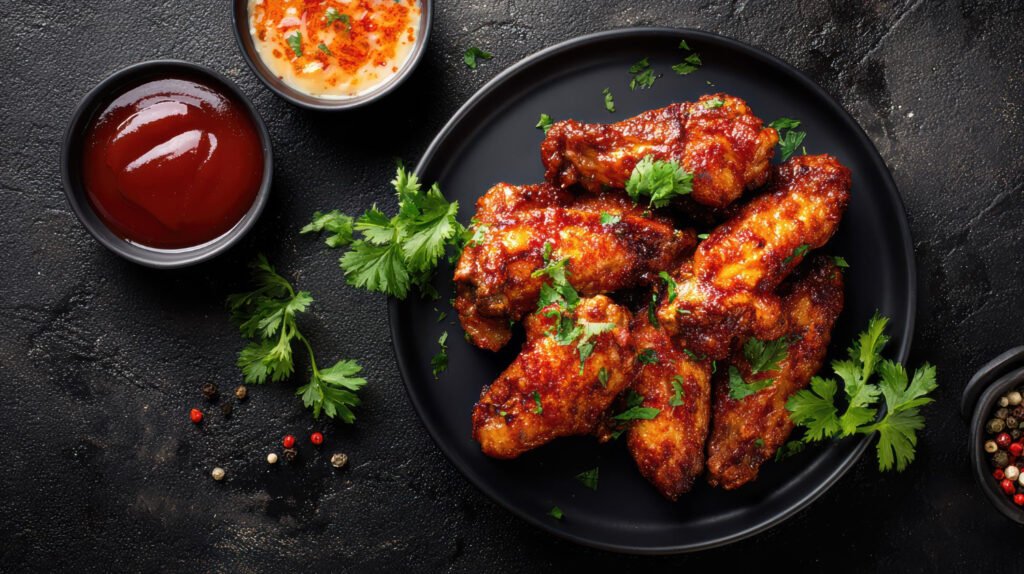
Real Charcoal Tandoor vs Gas: The 480°C Difference (And Why You Can Taste It)
Why we installed a real charcoal tandoor against every consultant's advice — and how 480°C clay-oven cooking is fundamentally different from a gas convection unit. Seven differences, three physics reasons, and eight dishes that need it.
Read →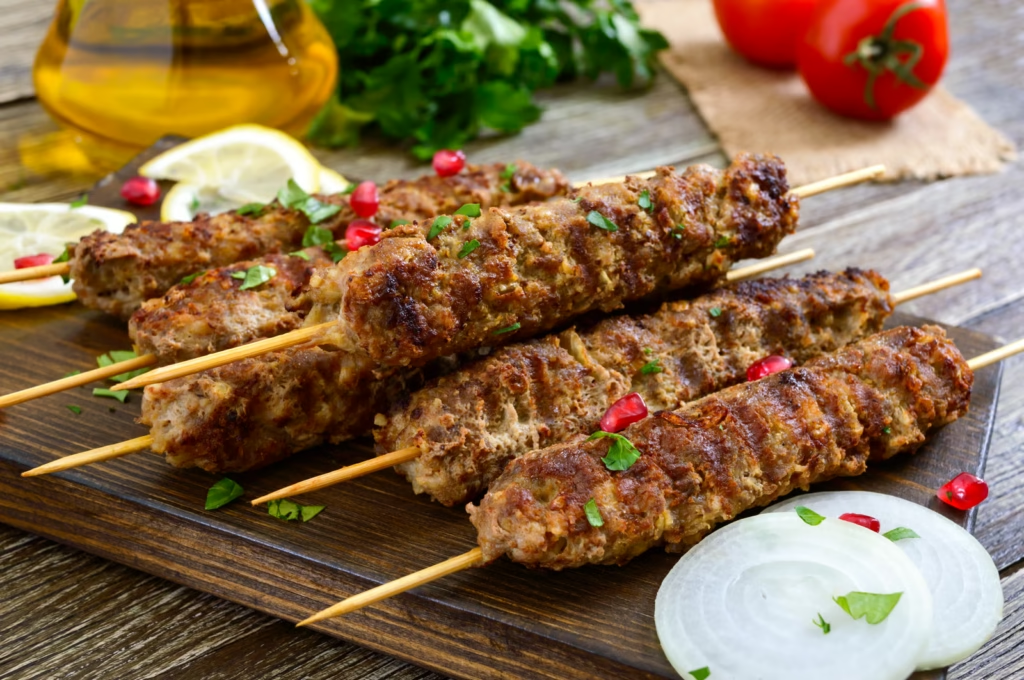
Halal Indian Food in Bangkok: How to Verify CICOT Certification at a Restaurant
How to verify halal at any Indian restaurant in Bangkok in 30 seconds. The four packaging markers, the five questions to ask your server, and an honest look at how BHARAT sources halal-marked meat from Makro daily (we are halal-friendly, not formally CICOT-certified at the restaurant level).
Read →Come taste it for yourself
BHARAT Flavours Of India · Huai Khwang, Bangkok · 2 min from Grand Mercure · Open daily 9 AM to 11:30 PM